27th Day of Victory of Love

Hoon Suk (Pak) Moon
January 2, 2010

It is the Day of the Victory of Love when we commemorate and celebrate the victory of true love. What I clearly felt when I read Father’s autobiography was that for True Father it is not only on Jan. 2 but each and every day of his 90-year life so far has been the Day of the Victory of Love. -- We, having the same standard of heart as True Parents have, must become children who win everyday with true love.

After the ceremony, Father, as he was leaving the room, suddenly appointed Mr. Sang Gwon Park, who has been in charge of business in North Korea, to be a responsible person for the World Peace and Sports Festival and Peace Cup. 

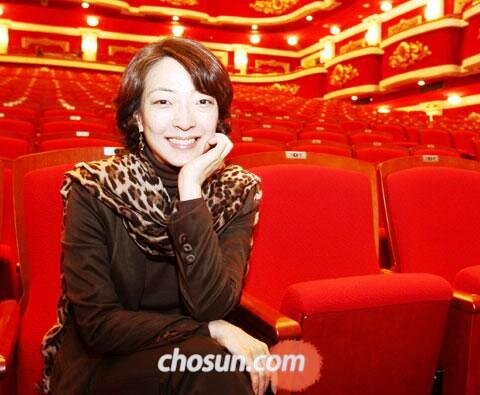
Hoon Sook Moon - Still Happily Married to the Rev. Moon's Dead Son

The Chosun Ilbo
November 11, 2009
english.chosun.com

It has been 25 years since Moon Hoon-sook married the ghost of her dead fiancé, the son of Unification Church founder Moon Sun-myung. This year is also the 25th anniversary of the Universal Ballet, which she heads and which was set up in memory of her "husband."

"You can't marry a ghost against your will," she says defiantly today. "I don't do everything my parents want. I'm a free person, and I make my own personal decisions. I chose this path because I wanted it."

Had she ever met her husband before he died? "Yes, we'd met and talked about our marriage. Then the car accident happened in the U.S., and the posthumous marriage took place in 1984, the year of his death. I was 21 then," she recalls. "People ask me if it's difficult to live on my own. Of course there are difficulties, but there are also difficulties when you live with someone else. It's just different types of hardship, and I don't think living alone is necessarily tougher. You have to nurture love constantly. I do it by thinking of my husband in heaven."

Moon Hoon-sook

The first Korean to become a soloist at the Washington Ballet, she danced Giselle at the Kirov Ballet of Russia. Now 46, she was active between the ages of 17 and 39. Had she ever felt drawn to her male dancing partner? "Of course. I'm a human. And how can you not know when someone likes you. But then you should have proper private life. I'm married to a man, and he represents all other men in the world. I was taught that if I love the man I married, then it's like I'm loving all other people."

Moon is raising two children, a 17-year-old son adopted from her husband's younger brother, and a seven-year-old daughter from her husband's elder brother. Her daughter has started studying ballet. "My parents recommended I to adopt children. You know, these practices existed in the past too," she says. "Parents raise children, but in fact, often times, parents mature as they raise children. I guess that's how life is."

"In ballet, you stand on tip-toe and waddle like a duck when you walk. It's a form of art that resists gravity and custom. It's abnormal in that sense, but I found my freedom in it." 

Chosun Ilbo Interview with Mrs. Hoon Sook Moon

Bo Shik Choi
November 5, 2009

HoonSookMoon-091105.jpg

Chosun Ilbo Interview with Mrs. Hoon Sook Moon on the occasion of the 25th Anniversary of Her “Spirit Marriage” and the Founding of the Universal Ballet Company

[Following is an interview of Mrs. Hoon Sook Moon conducted by Mr. Bo Shik Choi, as it was printed by Chosun Ilbo (Korean news daily) on November 2, 2009.]

Mr. Choi: What do you think people are the most curious about when they think of you?

Mrs. Moon: I know the answer to that.

She laughed. There was an old picture of a young man on the back wall of her office.

It has been 25 years since the “spirit marriage” of Mrs. Moon to the deceased son of the Rev. Dr. Sun Myung Moon, founder of the Unification Church. It’s also been 25 years since the founding of the Universal Ballet Company.

Mrs. Moon: No one can be forced into a spirit marriage. I don’t obey my parents unconditionally. I am a free person and I made my own judgments from a certain age. I chose this course because I wanted to.

Mr. Choi: Wasn’t the spirit world marriage in accordance to the Unification Church marriage tradition, where you had to marry the person chosen for you?

Mrs. Moon: It could be thought of as merely a religious ceremony, but I have always believed in the eternal world that people must go to after death, and I have always believed that we should focus on the love of living for the sake of others rather than on the love that we receive from others. I chose that way because I believed it was right, and I have done my best to live that way.

Mr. Choi: Did you ever meet your husband in person?

Mrs. Moon: Yes, I did. I met him and we had even talked about getting married. Then there was the car accident in America. A large truck slipped on ice and crossed the centerline. At the time, he was riding with two friends, but only he, the driver, died. We had the spirit marriage in 1984, the same year that he died. I was 21 years old.

Mr. Choi: In ballet, you stand on the tip of your toes and you walk like a duck. It is an art form that goes against normal behavior and customs.

Mrs. Moon: Yes, it is abnormal. I found freedom in abnormal ballet.

Mr. Choi: As a ballerina with a free spirit, how could you accept such a religious ceremony without any conflict in your heart? Shouldn’t you have resisted and refused?

Mrs. Moon: If you don’t understand my religion, it is also difficult to understand why I made such a choice. We live in a chaotic world but I found teachings that were true, so I followed them. Art does not necessarily deny religion. On the contrary, art is influenced by religion, and it comes out of divine inspiration. If you go to cathedrals in Europe, you will find Michelangelo’s drawings. My teacher said, “Whenever I walk into a theater, it feels as though I am entering a church.” The stage itself is holy. It is where you express the inside of your soul. My teacher once said, “After a truly great performance, the audience should feel clean, as though they had just taken a shower. That is the role of art. However, nowadays, there are many times that you want to go home and take a shower after watching a performance.”

Mr. Choi: Are you really certain that there is a world after death?

Mrs. Moon: Yes, although I have never seen it. I believe in the “eternal.” I don’t think that human beings are simply pieces of meat. After this world, we will leave our body, as we would take off our clothes, and live for eternity.

Mr. Choi: So basically, you are living alone in this world, but I don’t think you are special. There are many people who choose celibacy as monks, priests or nuns.

Mrs. Moon: People tell me that they think it must be tough to live alone. Although there are some difficult aspects to living alone, there are also difficult aspects to living with someone else. Although it is possible to get hurt from being lonely, it is also possible to get hurt due to a difficult relationship. Therefore, I don’t think that living alone is more difficult; I think it presents different sorts of challenges. It takes more effort to live together with someone else. Love must be continually cultivated. I am a very romantic person. I cultivate my love while thinking about that person in heaven.

Mr. Choi: It wouldn’t be so easy for you to say such a thing if you had been actually living with your husband.

Mrs. Moon: You could be right. I could be talking about something imaginary that has no substance. However, I like being idealist.

Mr. Choi: What does it mean for someone in your position to adopt and raise children?

She is raising a son (17) and a daughter (7), whom she adopted from two of her brothers-in-law. Her daughter has started taking ballet courses.

Mrs. Moon: Well, it was a recommendation by my parents, and adoption has been around for a long time. Of course, it’s difficult for the children. But they grow through it. Although parents discipline their children, there are many cases in which the parents mature through raising their children. That is life, isn’t it?

Mr. Choi: You were the first Korean to be a soloist for the Washington Ballet Company, and you also danced Giselle for the Russian Kirov Ballet Company. You were praised a lot for playing Giselle -- who is an unmarried woman that falls in love, isn’t she?

Mrs. Moon: Ballet is all about love. Swan Lake, Romeo and Juliet, Giselle, Chunhyang are good examples of ballets related to love.

Mr. Choi: Have you ever felt for a male dancer or a fan the kind of feelings that men and women feel?

Mrs. Moon: I am human, too, so how could I not? Don’t you think it’s natural to feel something when someone likes you? Sometimes we feel, “I like that person,” right? I am not a tree or a stone. I am a person. That doesn’t mean that I should allow my life to become disorderly.

Mr. Choi: Did you overcome those feelings with your willpower?

Mrs. Moon: I married one man, but that man represents all the men in the world, so if I love that person, then it is like loving all the men in the world. That is what I was taught as I grew up-

Mr. Choi: Did your thoughts change about what you had been taught after getting older and gaining more life experiences?

Mrs. Moon: I’m sure that would be the case for some people. It must be different for each person. For me, as I get older, I am more and more convinced that what I was taught is truly correct.

Mr. Choi: The Universal Ballet Company was made after the spirit marriage, was it not?

Mrs. Moon: Yes.

Mr. Choi: Was it the price for the spirit marriage?

Mrs. Moon: You think that I was promised a ballet company in return for marrying Reverend Moon’s deceased son? That is ridiculous. When I look back at what happened, it is mysterious. My father (Bo Hi Pak, the number two man in the Unification Church) was leading the Little Angels performing arts group. I was born in America and started ballet there, then moved to Korea when I was 8 and joined the Little Angels, and enrolled at the Sun Hwa Arts Middle School. I had to choose a major between Korean dance, singing and the gayageum. At that time, a ballet teacher came from America. Naturally, I majored in ballet. My teacher had a dream of founding a ballet company in Korea. It usually takes eight years to train a ballerina. It was a coincidence that the ballet company was founded in the same year that I got married.

Mr. Choi: Are you telling me that there was no direct connection between your spirit marriage and the founding of the ballet company?

Mrs. Moon: There was no connection whatsoever… Father did say to me, “You must now devote all your passion into your work in the arts.”

Mr. Choi: Doesn’t it annoy you that you are always followed by a religious label instead of just being recognized for your ability as a ballerina?

Mrs. Moon: It was through my faith that I could distinguish between right and wrong, so it is something that I am grateful for. But what I did was pure art. Yeong Ok Shin, Su Mi Jo, Su Jin Kang and other world-famous artists are also alumni of the Little Angels and Sun Hwa Arts School.

Mr. Choi: Through being a part of your religion, you received a lot of support for your ballet performances, did you not?

Mrs. Moon: Realistically, we were supported by the “group,” so we were very blessed. But now we are trying to become independent. When I was dancing, my life was only about ballet. I thought life was like that for everyone. However, when I retired in 2001 due to an injury, I took the lead of the ballet company and met many people. I was shocked when I found out that most people had never seen a ballet in their lives. Therefore, we made a dance that was part ballet and part musical, and I’ve started giving an explanation of the ballet before we perform. We even added subtitles. Some critics say, “Ballet itself is a language so how could you add subtitles?” but I said we were doing “kind ballet.”

Mr. Choi: You danced from when you were seven until you were thirty-nine. However, you never announced that you were retiring, and you never gave a performance before you retired, did you?

Mrs. Moon: I couldn’t. I didn’t want to. It would have been too sorrowful for me, because it would have meant that I would never dance again.

Mr. Choi: Are you thinking of returning to the stage again?

Mrs. Moon: I cannot dance anymore. Someone encouraged me to dance at the 20th anniversary of the founding of our company. Since it was three years since my injury, in a way I wanted to do it. But I didn’t think I could fully devote myself to both dancing and running the company. So I never was able to give a final greeting to my audience, which troubles me since I feel that I ended my career without proper manners. But I think I would be sad to do a retirement performance.

Mr. Choi: People can be barred from dancing if they stop dancing for a while, right?

Mrs. Moon: When I hear music, I naturally want to dance. My body moves. When I sit in the audience and watch the stage, I feel that I have become a peasant when I used to be a princess. It’s as if I lost my crown…

Mr. Choi: You must have cried a lot when you felt that way.

Mrs. Moon: I didn’t cry, knowing that it was something inevitable that all dancers must experience sooner or later.

Mr. Choi: How does one decide when to retire?

Mrs. Moon: When you can no longer dance as well as you used to, you should not go on stage anymore. If today is worse than yesterday and you don’t think that tomorrow will be better than today.

Mr. Choi: Who can tell such a small difference?

Mrs. Moon: Dancers can tell. There is a saying that, “If a dancer doesn’t practice for one day, then she will know the difference; if she doesn’t practice for two days, then her teacher will know; if she doesn’t dance for three days, then her audience will know.” Therefore, our dancers work six days a week. I put my foot down that five days is not enough.

Mr. Choi: I heard that, as a ballerina, you wished that your legs were 2 cm longer. I heard that you let your nails get longer so that your arms and legs would look longer.

Mrs. Moon: I cannot say that my body is ideal for ballet. My arms are short. My face is a little big -- nowadays dancers’ faces are as small as a single bean and their backs are long. Dancers who lack in physical attributes try to make up for it by developing their lines (of their bodies) or their ability to express themselves through dance.

Mr. Choi: It’s tough being a dancer, isn’t it?

Mrs. Moon: It’s heavy labor. Especially right before you go on stage you always want to run away. The world-famous singer Pavarotti once said in an interview that his worst enemy is the moment before he goes on stage; it’s the one moment that he wanted to avoid.

Mr. Choi: How did you overcome those moments?

Mrs. Moon: I could overcome those moments because I liked dancing. Once the curtains went up, I became caught up in dancing. Once you know the taste of ballet, it’s hard to get away from it. There is great ecstasy and joy when your body becomes one with the music. After the performance, I was always the last person remaining in the theater. I was so full of energy that I could not go home.

Mr. Choi: You always give the impression that you are confined.

Mrs. Moon: Once someone who knew me said that. That person told me to come out of the greenhouse. I was just really passionate about ballet, but that person could not understand me. In the past, I was afraid to meet people.

Mr. Choi: What do you do when you get mad?

Mrs. Moon: I walk. I walk without any destination. I used to walk a lot as a ballerina. I would think a lot while I was walking, sometimes cry, or go shopping -- which is normal for women. Sometimes I would just go window shopping.

The original article may be found here: news.chosun.com/site/data/html_dir/2009/11/01/2009110100840.html

Translation by Tossa Cromwell (HSA-UWC USA HQ) 

Universal Ballet At Twenty-Five -- Interview of Hoon Sook Moon

October 2009

HoonSookMoon-091000.jpeg

This year marks twenty-five years since Universal Ballet was founded. We spoke with Hoon-sook nim about her role as the company's director, including her work to further develop a new Universal Ballet creation, The Love of Chunhyang, which had its first performance in 2007. Hoon-sook nim also spoke about her growing children and last year's helicopter crash.

Universal Ballet has recently begun performing a new ballet, Chunhyang, continuing your vision to have Korean stories as part of your repertoire.

I think it's very important for a ballet company of our size to be balanced in its repertory. So you need to have the classic ballets, which are like the backbone of the company and root the company in tradition, and then you need to have contemporary works to express the emotions of today. Last but not least you also need to have your own unique creative works which give the company its own identity. The Universal Ballet tour of England in 2000 was one of the few international tours on which we didn't take Shim Chung and we were criticized for not performing our own unique work.

Ballet is a Western art form. If you can put Korean culture into a Western art form, it makes Korean culture so much easier for Western people to digest and understand. After living in Korea for many years, Adrienne Dellas, the founding artistic director of Universal Ballet, picked up a children's book of the Shim Chung story, and I think that's what inspired her to create a ballet version of the story. Shim Chung was created for the company way back in 1986 for the Asian Games, combining ballet, an established art form, with the Korean culture.

Twenty years ago, when Shim Chung was created, the level of ballet in Korea was not very well developed, therefore, the creative staff were all artists from the West. This time with Chunhyang, we tried to create it "in house," with Korean artists. The staging, set and costume designs, choreography and lighting were created by Korean artists. The only Western person that was part of the creative staff for Chunhyang was Kevin Pickard, who had also composed the music for Shim Chung. In ballet, the music is the key. Everything is built upon that foundation. Since we had wonderful success with Shim Chung, we decided to collaborate with Kevin again for Chunhyang.

The National Dance Company director, Bae Jung-hye, created a production of Chunhyang in Korean traditional dance format. After I watched their performance we collaborated with her to create our production; it became the model for the Chunhyang that we created. I asked Ms. Bae to come and stage the piece, and we adapted it with Brian Yoo's choreography -- ballet instead of Korean dance, and with Kevin's new music. It's still evolving and taking on its own life. We are beginning to see where we need to go to detach ourselves from the original Korean dance production and develop it into something completely new and uniquely ours.

This was the first ballet production that you have had complete control over, now that Oleg Vinogradov has retired as artistic director. What did that mean in practical terms? Oh, it was very difficult! Sometimes reporters ask me when the next Korean ballet will be made, and I say, "Please give me some time. I need to recuperate!"

To get everything right and find the right balance is so difficult because you are dealing with so many elements -- music, choreography, staging, costumes and set designs, lighting and then the dancers. In addition, there is the difficult task of finding the right balance between Eastern and Western cultures as well as defining the style and making sure all the elements are in line with the style. If there is no unity and things are not tastefully done, you can end up with a ballet that is a real mess.

Are you involved hands-on with the details of the production?

I am not a choreographer, stager, designer or musician so I do not choreograph stage, design or compose. My job as the director is to bring all the different elements together to make a cohesive whole, to be the glue that holds it all together. Chunhyang is the first production where I have taken on that role alone, instead of sharing that task with Mr. Vinogradov.

I was on the phone with Kevin in the middle of the night (because of the time difference) night after night after night. We were listening to music over the phone.... "Take out the drums; I don't like this part; that has to be more romantic..."

It's already such a long process to get things right. There are so many people involved; to get everyone on the same page is quite difficult, especially when you are working with artists! Doing this while working on separate continents, Kevin being in the United States and I in Korea, made it even more difficult.

I never studied music seriously, so when I collaborate with Kevin on music for a production, I have to trust my feelings. For example, I may say to Kevin, "When I listen to this piece of music that you created I feel that it sounds like X, but it's supposed to feel like Y; it's not quite right and my feeling is that it needs to have a bit more of Z. And Kevin would work with that to adapt and rewrite the music.

It is rare to find good artists who will listen, positively, to criticism of their work, and then go about changing it according to what you are asking. But we had a very good team. I know when to take a step back and Brian [the choreographer] knows, "Okay, Julia absolutely wants this," so he changes this or that. I think that's what made it work, being open and being able to listen and accept another's opinion. Without this, it would have been very difficult to achieve what we did with Chunhyang.

Creating a new ballet production is a long process. Of course, Chunhyang is not a completely finished work yet. We have created a second version, and by the time we work through the third version, I think we are going to have a very beautiful ballet that can be presented anywhere in the world.

Do you feel a particular sympathy for or relationship with the Chunhyang story? Mongnyong and Chunhyang are in different worlds and he bridges the gap. Heung-jin nim is in the spirit world and you are here.

Oh, I would have loved to dance this ballet. I watched every night and felt that it expresses somewhat my story. Chunhyang waits a long time to finally meet her husband again, after he goes away to study, and I'm waiting a long time too, so I can understand and relate to that.

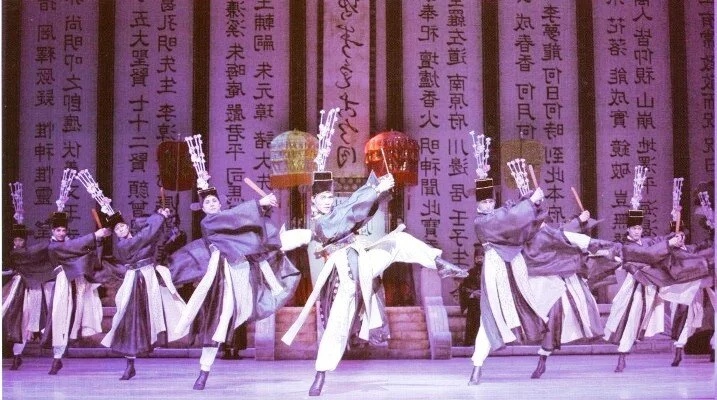
In that last part of the ballet especially; I was in tears when I watched Chunhyang and Mongnyong's reunion pas de deux. I think Kevin is especially good at writing romantic pieces. The music is beautiful, and it is also very well choreographed. I love the bleakness of the stage; there's just one backdrop with old Korean writing so it's very simple and stark. The ballet finishes with just two people, not with a grand celebration or finale. It's a deeply moving scene.

Could you reflect on the progress of the ballet company, given that this year is the twenty-fifth anniversary of its founding?

I think we are very fortunate and blessed. Not many artistic organizations have the support that True Parents have given this company. Without their support we would not have been able to achieve what we have in the last twenty-five years. The only other ballet company in Korea that has this kind of support is the government-sponsored Korean National Ballet. Father has been supporting Universal Ballet on the same scale, if not greater, as the government has supported the Korean National Ballet. That really says something about True Parents' vision and scale.

Very often, people who sponsor the arts want to have a say as to what the company is doing -- who is cast in what roles, what works are produced, and so on -- but True Parents support the ballet and give their complete trust.

It has been a long and difficult twenty-five years, but I have tried, first as a dancer and now as a director, to give my utmost to bring joy to our True Parents and to make them proud of the ballet company. Universal Ballet is recognized for its very high standard and is very well respected in the world of the arts. This reputation was not created overnight, but through endless effort and Jeong Seong. I want to represent True Parents and give True Parents' love to the audience through the ballet company.

What has the existence of Universal Ballet meant for ballet in Korea?

I believe that Korean ballet would not be what it is today if Universal Ballet had not been created. We pioneered ballet in Korea when it was very primitive. In 1984, when the company started, we were the first to bring choreographers, teachers, costume and set designers and dancers from the West to Korea. We have been and still are a leader in the field of ballet in Korea. The quality of our productions are world class and we continue to take care of and extend effort in the smallest details -- in Korean we call this Jeong Seong, Hyung-jin nim's favorite word! -- Which is what we put into each aspect of our productions.

I do not like to do things halfway. I really don't like to see anyone -- especially dancers -- doing things halfway, without investing themselves one hundred percent into what they are doing. It is not only the body that is dancing, but the mind, heart and soul together with their body. I cannot tolerate dancers who don't give that on stage. I think all companies take on certain characteristics of the person who is leading the company. Our dancers know that one hundred percent effort is what I want and what I expect to see onstage.

But performances are not always perfect. As one ballet teacher said to one of her students at the Kirov Academy, "it's not important that I see you achieve the movement today. What is important is that I see you trying every day, never giving up, to get it right." As they say, there is no perfection in art. What is important is that we constantly strive to reach perfection.

What is the dynamic between the National Ballet of Korea and Universal Ballet?

The National Ballet has also grown because of our influence. They were founded much earlier than Universal Ballet, but during the past few decades, both they and we have developed as a result of the healthy competition between the two companies. With the growth of Korea's two major ballet companies the overall level of ballet throughout the nation has developed tremendously in a very short time.

With the quality of the National Ballet and the recent opening of an arts university here in Seoul, do you feel as if you're being crowded out?

No, it's competition! It's good, healthy competition -- and that is very good. But it's constant work; the minute you start paying less attention, thinking you are on top, that's when you begin to fall down. Getting to the top is hard, but the goal of becoming the best pushes you and inspires you as you go. What's harder is staying on top once you get there.

What else occupies your mind as you look to the future?

My biggest concern right now is how to secure the company's financial future. Up until now a great deal of effort has been made to raise the artistic level of the company -- the quality of the dancing and the quality of the productions -- and also to develop effective marketing and promotion strategies. What the company needs now is financial stability that will allow us to continue into the future. This is something that I feel I must accomplish in my lifetime.

It's not easy for a ballet company to make a profit.

We are trying a lot of things. Usually a company of this size needs to have an endowment. No ballet company in the world supports itself on ticket sales alone. So, either you must be like the New York City Ballet and operate from a large endowment, or you have a board of directors that raise funds for you. We need to create an endowment.

At the same time, we are working on opening a new Universal Ballet Academy in Gangnam. If we could have ten branches of the Universal Ballet Academy throughout the country, that would help support the company greatly, by exposing more of the general public to ballet, developing new dancers and ballet fans, and providing income that will give financial support to the company. We are also preparing to rent out our costumes and sets.

I heard the Universal Arts Center is undergoing improvements.

We are currently renovating the seating area so that the seats are tiered. Previously the auditorium had a level floor and people couldn't see the stage well enough from some of the seats. The Arts Center will reopen in late October with its new seating. I am truly grateful to our True Parents for supporting this project.

I read a recent newspaper report about a new project you have called "Ballet el Sisterna," that seems to benefit the disadvantaged. Can you tell us about it?

As part of the events marking our twenty-fifth anniversary, we have begun a new program to support young dancers whose families don't have the money to pay for good ballet education.

The program is modeled on a music education program in Venezuela known as El Sistema. That program first started providing music education to young people, to help rescue them from street crime. It has produced some outstanding musicians, including Gustavo Dudamel, one of the world's fasting rising symphonic conductors.

Similarly, our program will provide ballet scholarships for a few talented girls to cover their ten years of hard training to become a ballerina. This year, we selected a nine-year-old refugee girl from North Korea!

Can I digress from the weighty subject of your professional work and ask you about your children?

Shin-whul is in first grade now; she just started this August. Shin-whul is a very special girl, very sensitive and loving. She's my sunshine during the day and my moonshine during the night. She has a wonderful energy about her. Sometimes she is very sweet and cute, sometimes very funny, and sometimes she is very elegant and mature. She loves to dance and wants to become a ballet dancer. We'll see how it goes. She also sings very well. She sang for True Parents a few days ago, and True Mother suggested, "Maybe Shin-whul should be a singer, not a dancer!"

May I ask about Shin-chul nim?

Shin-chul is seventeen now, and presently he is in New York. I e-mail him at least once a week. I don't expect him to reply, because I know he is studying very hard. It's not easy being a teenage boy. He has his goals, he has his dreams; he's very determined. When I read Father's memoirs after the book was published this summer, I thought, "Oh... that's why Shin-chul is the way he is. He has Father's character in him!"

We heard that all three grandchildren who were in the helicopter crash a year ago were unhurt. Is Shin-whul really okay?

She used to talk about it a lot. She also drew pictures about it. She remembers it exactly. She drew some pictures – which I kept -- of a helicopter burning, but there were birds -- there was a bird here; there was a bird there. Drawing is a very good outlet for children to express their emotions. I don't think she would have any problems getting on a helicopter again. She loves to fly!

How about you?

Oh, yes! I really do not like small planes but helicopters are fine!

I hope you heard everyone was okay at the same time you heard the helicopter had crashed.

Actually, no... I had just had lunch with True Parents and said goodbye to them at the Marriott Hotel, as they headed for the helicopter. I had an appointment so I was heading back to Hannam-dong. As I arrived at Hannam-dong, I got a call from a reporter who works at the culture desk and knows me because she writes articles about the ballet company.

The reporter asked, "Does your father-in-law own some land up in Ga-pyeong County?"

I said, "Yes."

She said, "We just heard that a helicopter crashed and I was trying to confirm whether your in-laws, Reverend and Mrs. Moon, were on the helicopter."

The next five minutes after that were the most frantic five minutes of my entire life.

Because reporters get news straight from the police, they are the first to know. The reporter called me because she wanted to confirm whether True Parents were on the helicopter and get it out on the news.

I called Hannam-dong security immediately. They had no news of any crash. Then I started calling Won-jul and everyone else who was on the helicopter, because I had just been with them...

Nobody was answering. I was imagining the worst. I can't describe what those five minutes were like. My heart was pounding so hard that it felt like it was going to pop out of my chest, and my hands, whole body was trembling.... I was sure that it was our helicopter, but I had no news of True Parents, the grandchildren... so many people.

I couldn't breathe. My heart was pounding. I was crying...

Finally, I called Hannam-dong security again and by that time they had received the news that it was indeed our helicopter that had gone down, but that everyone was safe!

I jumped back into the car and went to Chung Pyung, to the hospital. From the car, I phoned Hyung-jin nim, who had not yet heard the news. When I arrived at Chung Pyung, they were still bringing people in from the crash scene. The ambulances, the firemen with orange-yellow suits... Reporters were already there with TV cameras.

True Parents were already in a hospital room. And when we got there, the grandchildren who had been on the helicopter with them were in one of the rooms playing! I was amazed and so grateful.

Later Jung Won-ju told me that as they were running away from the burning helicopter, the other two little children were crying, and Shin-whul tried to comfort them by saying, "Don't worry, the fire is going to go out because it's raining." That's such an amazing thing for a five year old to say in such a situation. 

Devotion, Loyalty and Love

Hoon Sook (Pak) Moon
January 2, 2009
Day of Victory of Love

Hoon-sook nim gave the following address on the twenty-sixth Day of Victory of Love, January 2, the twenty-fifth anniversary of Heung Jin nim's ascension. The commemoration of the holy day took place at the Cheon Jeong Peace Palace.

The True Parents of Heaven, Earth and Humankind, the King and Queen of Peace, brothers and sisters who have come from all over the world: I am very honored that True Parents have asked me to give a memorial speech on this twenty-sixth Day of Victory of Love. The Day of Victory of Love is when we celebrate and remember the victory of true love. God and True Parents are the origin of true love. Even though there was love before True Parents came, there was no true love. Even though there have been many people who have called God Father, there were no true sons and daughters. Even though there have been many nations in the world, not one of them was Cheon Il Guk, God's true nation.

Last year, on July 19, 2008, God demonstrated His true love to the whole world through the helicopter incident. In a situation in which everyone should surely have died, True Parents substantially resurrected, because they are the embodiment of true love. This is an expression of God's love and the historic event that revealed to the world that our True Parents are truly the king and queen of peace, the Messiah, the Lord at his second coming, who has overcome and gone beyond death. This is a true victory of true love, and the genuine meaning of what we all have to celebrate on this Day of Victory of Love. Thus, we should all inherit True Parents' true love and become victors of true love. We, too, must be the embodiment of true love and become God's true sons and daughters.

On February 20, 1984, True Parents blessed me to Heung Jin nim (though I am so inadequate for that role). I am simultaneously mystified, deeply grateful and overwhelmed on this twenty-fifth anniversary at how True Parents blessed an incomplete person such as myself to Heung Jin nim, and connected heaven and earth through Heung Jin nim's sacrifice. Heung Jin nim left behind an exemplary tradition of True Parents' true love on earth. Behind this has been the providence of True Parents' devotions and conditions, which nobody knew about or understood.

The Day of Victory of Love resulted from True Parents' true love toward Heavenly Father, which overcame and brought victory over Satan's realm of death. Heung Jin nim was offered to Heaven as the embodiment of devotion and loyalty, according to the message True Father wrote for him in Chinese characters [after his ascension]. Heung Jin nim was our elder brother who sacrificed himself to save others, and although he lived a very short life on earth, he was always ready to offer his life for the sake of True Parents.

Whenever he met blessed children of a similar age, he always asked them whether they were ready to offer their lives for True Parents, and he himself had the resolve to do so. His actions at the time of his car accident set such an example. When the accident occurred, Heung Jin nim turned the steering wheel to the right in order to save his friend sitting next to him; thus he took on himself the entire shock of the impact with the large truck.

This spirit of willingness to sacrifice one's life flows through the blood of True Parents' True Children. That is the true love lineage. Hye Jin nim and Young Jin nim were such True Children; and our elder brother Hyo Jin nim, who ascended into the spirit world last year, sacrificed himself in the same way. Every single child in the True Family has the same spirit of sacrifice for the sake of True Parents.

In 1983, when True Father was himself the target of communist powers, Heung Jin nim went to the spirit world in Father's place in order to deflect the danger that threatened True Parents. Likewise, other True Children have offered themselves when providential crises have arisen. True love is thus practiced through true sacrifice. Because True Parents providence of building Cheon Il Guk, the kingdom of heaven on earth, is so important and great, satanic forces focus their all-out attacks on True Parents and the True Family. And on every such occasion True Children have become the sacrificial offerings and have gone to the spirit world. Again, on July 19 last year, Satan's attack reached True Parents themselves. However, True Parents dramatically and substantially resurrected through their victory of true love, and in doing so, brought Satan to surrender.

The twenty-sixth Day of Victory of Love, which celebrates this great victory, is more significant and meaningful than any other year. I sincerely offer my humble congratulations to True Parents, Heung Jin nim, the commander in chief in the spirit world, and the other True Children in heaven and on earth, for the victory of their true love.

As unworthy as I am, I have done my best over the past twenty-five years to look after Heung Jin nim's family. Whenever I danced, it was with Heung Jin nim, and through dancing I have earnestly tried to express the glory of God and True Parents. True Parents founded Universal Ballet as a memorial to Heung Jin nim, and this year we are celebrating the company's twenty-fifth anniversary. Universal Ballet has grown into one of the best ballet companies in the world, which was only possible because of the grace and support of True Parents and of Heung Jin nim in the spirit world.

I will do my sincere best so that Heung Jin nim's true love is elevated to a higher dimension through the Universal Ballet. I pledge to devote my whole life to serving and attending True Parents and to living my life to the fullest, upholding Heung Jin nim's spirit. With this pledge, I would like to end this brief memorial address. Thank you. 

An Interview with Julia (Hoon Sook) Moon - Her Life and Her Art

January 2008

It would be very nice to know something of how you began studying ballet.

Hoon-sook: [Grinning] I didn't choose ballet... Well, you know many little girls dream of being a ballerina. They see the crown, they see the satin point shoes, they see the glittering costumes... Like little boys say, "I want to be a race car driver," or "I want to be an astronaut," little girls say, "I want to be a ballerina." I was one of them. When I was a little girl, I used to do a lot of splits and back-bends in the living room. I remember always showing off: "Mom, look at me! See what I can do." I guess it was something that I had a leaning towards as a child.

I started lessons, with my younger sister, at McLean School of Arts. It was in one of those old, little wooden churches where the pews were taken out to make a dance studio. The fact that my first ballet school was in a church is quite meaningful because through all the difficult moments in my dance career it was my faith that sustained me.

How old were you then?

I was seven. My sister and I had two lessons every week and it was fun. I remember doing the school performances. For some reason, my teacher kept picking me for main roles. I guess I was not so bad. My first role as a dancer was a little squirrel, picking up acorns in the school's junior company.

At the age of nine, I went to Korea and danced with the Little Angels for a few years; this gave me the opportunity to learn Korean folk dance.

After returning briefly to the U.S. to finish elementary school, I entered the Sunhwa Arts School, which at the time was called the Little Angels Arts School. Because I entered the junior high school, I had to pick a major. The Little Angels sing, dance and they play the kayageum, so I could choose one of the three. But that was the exact same year that Adrienne Dellas arrived and started teaching ballet at Sunhwa. I think she must have been one of the first Westerners to come and teach ballet in Korea.

Wasn't this long before Universal Ballet existed?

This was 1976. It is very interesting to see how this whole story unfolded. Ms. Dellas came to Korea's in 1976 to teach in the Ballet Department at Sunhwa. She gathered all the students in a huge hall because they were trying to recruit ballet students. I was there. She was talking about ballet and explaining some steps. I think she must have asked, "Does anybody know how to do ballet?" As I had had ballet lessons in the States, I raised my hand. I remember standing up and showing a step called Routs De Jambe.

So, I decided to go back to ballet. And that was the beginning of my professional training, at Sunhwa. Ms. Dellas wasn't just teaching ballet to her students as a hobby. She was teaching with the goal of creating a company. It takes eight years to train a professional dancer, studying from age eight to eighteen.

You have to start young.

Yes. Professional training should start by ten years old at the latest. By the time you're eighteen, with eight years of training, you're ready to join a professional company.

Universal Ballet was started in 1984. 1976 to 1984 is exactly eight years. Back then, nobody knew what would happen in 1984. Nobody knew that Heung-jin nim would have an accident. Nobody knew.

But Ms. Dellas had the goal, the hope and the dream of creating a ballet company, and she came here and taught ballet with that in mind. I studied for three years with Ms. Dellas. During the third year, the Royal Ballet of England was in Seoul performing for the opening of the Sejong Center for the Performing Arts. Ms. Dellas invited Gerde Larsen and Donald Macleary, the ballet master and ballet mistress of the Royal Ballet, to come to Sunhwa to audition seven students including me. All seven of us passed the audition and were accepted to the Royal Ballet School in London. That tells you something about the quality of her teaching.

We were all thrilled and elated. I was one of the first three students to leave Korea and enter the Royal Ballet School in England. However, my dreams did not last very long. We lived in the church headquarters at Lancaster Gate and we took the underground to school every day. I was there for about a year. What was really hard on me was that although we were accepted, when we got there, we were all placed in a foreigners' class. There was only one school performance a year, and the foreign students were not allowed to be in it. This made us feel like second-class citizens. It was disheartening and depressing.

Because I got depressed, I got injured, and I wanted to stop dancing altogether. I started asking myself, Is this something I really want to?

How old were you then?

I was seventeen when I entered the Royal Ballet School. After entering the school, all the students take an exam at the end of the year to determine whether another year will be given to them.

Although the school offered me another year, I decided to leave the school. I had decided that ballet was not suitable for me; not only did I not have an ideal physique for ballet I also had a very shy personality, and I didn't think the stage was the right place for me. So, I called my parents and told them I didn't want to dance anymore. I was so unhappy. I was literally sobbing on the phone. My dad picked up the phone and he said, "Don't you move. Don't think of going anywhere." Basically, he was saying, "You've put so much work into this that to give it all up now would be such a waste." He said, "Try one more school, and if after one more school you still really feel like quitting, I'll let you quit."

So, from there I went to Monte Carlo, to the Academie de Danse Classique Princesse Grace. I was there for almost two years. It was such a different school! It was like a family. There were all nationalities there -- Japanese, Irish, French, Italian, Swiss -- they came from everywhere and were all treated equally. An added bonus was the weather, which was so wonderful compared to the rainy weather in London.

My injury healed immediately, which goes to show how physical problems can come from emotional and mental stress. I was happy there and I continued to dance.

When I graduated from the Academie, I thought about auditioning for the Stuttgart Ballet, but the artistic director. Marcia Haydee, was away because she was directing two companies at the time. In the end, I came home and auditioned for the Washington Ballet. Because I'd been away from home for so many years, I thought it was a good time and a good chance for me to be with my family. I was offered a position at the Washington Ballet and worked there for two years.

In the meantime, Adrienne continued to train more students in Korea. It was during my second year at the Washington Ballet that Heung-jin nim ascended, in 1984. Soon after that came my blessing to Heung-jin nim, and the ballet company was started a few months later, as a memorial project to Heung-jin nim.

At the time of Heung-jin nim's matching, Father brought all the blessed children to East Garden. Father said, "Heungjin nim's bride should be an artist so she can devote her life to her art." So, he was looking for a bride among the second-generation girls who were artists. There were painters, singers, musicians... If Father had chosen a concert pianist instead of a dancer, perhaps we would have an orchestra today!

At the time of the matching, I was touring with the Washington Ballet. We had left for an Asian tour in January and the blessing was February 20. I got a call from my mom in the middle of my tour, when we had just arrived in Hong Kong. My mom basically said, "You have to come back."

I said, "This is a company of twenty-one dancers; you just can't ask me to come back in the middle of an Asian tour."

She said, "Well, there's a going to be a blessing."

My parents didn't tell me the reality until I arrived at the airport in the U.S. We didn't say much until we had picked up my bags. Then Dad said, "I think we should go to the coffee shop. We need to talk." So we went to the coffee shop. We sat down, and the first thing he said was, "Have you ever thought of being a nun?" And that was it. I knew immediately what the whole situation was about. I understood.

You understood just from that one question?

That was all he said, and I knew exactly what was going on. It was as if somebody had turned on a faucet, because I started sobbing as I'd never sobbed before. I don't know if it was me, or what it was. We didn't say anything else. Then he explained to me about the matching with Heung-jin nim.

I didn't have any nice clothes with me, so we went to Belvedere and my mom lent me her blouse and jacket. Then we went to East Garden, and everyone was already there, where Father had gathered them. I was one of the last to arrive, and soon after I arrived, the engagement was announced. The engagement ceremony was the following morning.

You might have heard that Heung-jin nim had thirteen cats before he passed away. So many cats were living in his room he had to sleep in the closet, but he just loved cats. But after his Seunghwa, they gave most of the cats away, except one black cat called Malachi, who was taken to live at Belvedere, and two pure white ones, Mamio and Tamio, that stayed at East Garden. That day one of them came walking in. You know how cats walk... and the cat went from person to person, and then it just plopped right down in my lap.

Father wanted Heung-jin nim's bride to be an artist...

Yes, and that's how the company got started, but Adrienne didn't know any of that at the outset in 1976. She didn't know what would happen eight years later. It's really quite interesting how everything fell into place. Everything was already prepared for a ballet company to be started.

The other interesting thing is that though Adrienne had studied various styles of ballet training, she had chosen the Vaganova system and the Maryinsky ballet style for the company, because she thought it was the system that most suited the Korean body. She was always referring to the books and videos of the Maryinsky Ballet' that she had studied. Back then in Korea, even to get a video of the Maryinsky Ballet was very difficult. Then a few years later, in 1989, an unimaginable thing happened.

Oleg Vinogradov, who had served as the artistic director of the Maryinsky Ballet for twenty-three years, agreed to begin working with us as the artistic director of our new ballet school in Washington, DC, a position he still holds today. Meeting him and beginning to work with him was very providential. When we started in 1976, we couldn't have imagined that the artistic director of the Maryinsky Theater would one day work with us. Back then, the Kirov Ballet was something we could only see in videos or books. It was a world we could only dream about.

There have been so many times in my life where I feel that Heung-jin nim has been helping me. Sometimes with very small things. I remember one day I needed a basket of flowers to present to someone who was leaving that day, but I hadn't prepared one; nobody had prepared it. I arrived at the ballet thinking, Oh, my God, there isn't enough time. Then I went into my office and there was a basket of flowers sitting on the table. Of course, somebody had sent them to me, but there they were and I could give those flowers to the person who was leaving. Things like that happen, and when they do I know he is helping me.

When the company was created, so many people were envious of me. Even now some people say, "She has her own company, everything is paid for. Any dancer or choreographer would just die to have that position." But for me, back then, there were so many times I wished the company didn't exist, because it was just so hard. I felt I was trying to be something I was not. I always felt that I was inadequate as a ballerina, but I was being called upon and was expected to be a world class ballerina.

I had a certain amount of ability but not the physical condition or natural coordination it takes to be a prima ballerina. But then again, Heung-jin nim sent me the best teacher I could ever dream of, Geta Constantinescu from Romania. And because of her, I was able to go to the Maryinsky and dance on their stage. He sent me exactly the coach that I needed. She may not have been the most famous, internationally known coach, but she was the one who knew exactly what I needed to learn in order to grow and mature as an artist.

And then when I stopped dancing, I had a similar experience with another person, an acquaintance I had made, who helped me learn about matters of administration and dealing with people, and who helped me grow and mature.

So, I always feel that God and Heung-jin nim have sent me the people that I needed at every point in my life. He also sent Anne. She is a blessed member who had ballet and opera training before she joined the church! She has helped get us organized so we could keep moving forward. She's been here helping me for eighteen years.

So the company was my cross. Dancing was for me... my cross, my sacrifice. I spent many years crying and endlessly pushing myself.

Doesn't it require a lot of sacrifice to become good? Dancing in itself is a sacrifice. Non-dancers have no idea what kind of work dancers have to do to maintain their craft. A dancer has to be dedicated to ballet religiously. The word "religiously" is used often to express the undivided dedication and devotion that ballet dancers must have.

I am somewhat of a perfectionist and was always very critical of myself and my dancing. I was never satisfied with my performances and that drove me to work even harder. I remember that after a performance of Sleeping Beauty at the Seoul Arts Center, I was so upset thinking that my performance was so bad that I walked all the way home from the theater, crying. (It was quite a distance.)

There were times when the burden was so great that I wished that the company did not exist. I spent most of my twenties and thirties in tears. But this was Heung-jin nim's memorial project. I couldn't go to Father and ask him to close the company. When you know Father's life, you can't go to him and complain. You can't say, "It is too hard, Father."

You just can't do that. So one way or another I had to continue, and I did because of True Parents and Heung-jin nim. There were many times when the faith that others had in me gave me the strength and courage to go on when I lacked faith in myself and my ability. When I look back [sigh], so many times I wanted to let everything go, but now I'm really so grateful. For me, it's such a great privilege to be able to say, "I'm a ballerina."

When you were in Russia, you got good reviews!

I got good reviews but not because I was technically brilliant. I was not a virtuoso dancer. I was lyrical, romantic, dramatic and musical. Those were the qualities that helped me through my career. The technical aspect was always very difficult for me. When I look back now ballet gave me so much in my life and enriched my life so deeply. I'm so glad that I was pushed through those years.

What would I have done if I had not gone this route? I haven't the faintest idea, really. I think I would have been a very good secretary, because I like to organize. I don't like to be out in the front. I don't like to be the person carrying the flag. I like to be behind, helping people and organizing. When I was growing up in Washington, my dad used to have his office in the basement of our house. And he had a very wonderful member, Betsy Hunter, who was his secretary. I thought, When I grow up that 's what I want to do. I used to think I'd be a secretary and help my dad or something like that.

But I do have other interests -- I love horses, so I would have loved to do anything with horses. And I'm interested in photography. But right now, what I would like most to do is study, really study -- study theology, study world history. If I had the time, I would do that.

Where do you see Universal Ballet going from here?

In the past twenty years, ballet here in Korea has gone from very primitive to world class. In a very short time, Korean ballet has covered the same ground that European ballet covered in three hundred or four hundred years.

We've been able to accomplish that with the help and direction of Oleg Vinogradov. We have really been blessed, because when you say classics, in ballet, Russian tradition is considered the best. It is there that many of the great classic works were created, including Swan Lake, Sleeping Beauty, The Nutcracker, La Bayaclêre, and Don Quixote. The fact that we were able to inherit that tradition straight from the root is a huge blessing and now it's the foundation of the company's work.

During the past ten years, Korea has slowly developed a classical ballet audience, but the majority of the population is still not familiar with ballet. Therefore, in order to build a larger market, we need to continue to develop the audience, through special programs such as lecture-demonstrations, performances at local cultural centers, performances with narration, brunch ballets and open rehearsals as well as through high quality PR and marketing, and most importantly, by consistently presenting excellent performances.

We also need to take the development of ballet here in Korea to the next level by introducing other styles of works besides the classics, including more recent works by European and American choreographers. But what is most important for the development of Korean ballet is to be capable of creating new works, unique to Korea, unique to Universal Ballet, works that give us our own identity.

You have Shim Chung, which is unique.

Shim Chung was created in 1986. Last year we created two new Korean works, The Love of Chunhyang and the ballet-musical Shim Chung.

Aren't musicals the new trend in Korea?

Musicals are popular because they are easier for the general public to understand and enjoy. As a result, recently here in Korea there has been a huge boom in presenting musical performances. Because musicals are so popular in Korea, we are taking that element and combining it with ballet in order to introduce classical ballet to people in a format that is easier for them to understand.

But we have to be careful not to lose the classics. Just because something is popular doesn't mean you can do it all the time. Artists also have to guide and lead the artistic standard, the artistic culture of the public. They need to constantly strive to keep the artistic and cultural level high. For that, pure classics, such as opera and ballet, are important.

What do you want to communicate through the choices you make for the repertoire?

In the early days of the company, Ms. Dellas, the founding artistic director, chose the Shim Chung story as our first original Korean ballet. I thought it would be wonderful to create a trilogy of Korean ballets that express values that True Parents uphold and teach. Shim Chung expresses filial piety, the story of Chunhyang is about chastity, loyalty and true love; and Heungbu-Nolbu is about brotherly love.

Mr. Vinogradov once said that when you go into a theater, and watch a performance, it should feel as if you took a shower -- uplifted, renewed and inspired. That is the power of art, because art is an expression of the human spirit. I read somewhere that George Balanchine said that stepping into a theater is like stepping into a cathedral. Dostoyevsky put it this way: "Beauty saves the world." Art has the power to reach beyond nationality, race, religion and politics because it touches the heart directly. That is what we are trying to do here at Universal Ballet, uplift and inspire people through beauty.

Looking to the future, what is your vision? When you have a goal, it gives you clear motivation to work hard and even make sacrifices in order to accomplish it. But once that goal is achieved, how do you maintain it?

Staying at the top of your field requires just as much motivation and sacrifice as it takes to get there. For the past twenty years, we have been climbing up a very steep mountain, because when we started, ballet was very primitive here in Korea. The reason Universal Ballet was able to grow into a world-class company in such a short time was the combination of True Parents' vision and support, Dr. Pak's administrative leadership and Oleg Vinogradov's artistic direction.

I know that eventually, one day, I will have to carry the responsibility of leading and sustaining the company on my own. In the past six years since I stopped dancing, I have had to learn how to shoulder that responsibility. My lifestyle has changed completely, 180 degrees, because when you are dancing, basically, you only think about your performances and preparing for those performances, which is exactly what a dancer should do.

You cannot dance and think about how many tickets have been sold, how much the budget deficit is, how many injured dancers you have, or what repertory the company should dance next year. A dancer has to be 1,000 percent focused on dancing. Which meant while I was dancing my lifestyle basically included home, studio, theater, rehearsing, performing, recuperating. That was it. That lifestyle reinforced my naturally introverted nature; necessitating a big change when I was faced with the prospect of taking over the leadership of the company.

It's been a difficult transition for me to make, but it was an inevitable transition that I had to make for the sake of the company. At the same time, there is a generation shift in progress in the church as a whole, with several members of the True Family playing key roles.

Sometimes I feel like I really don't have it in me; I feel inadequate to the task. But then there are days when I think I can do it. I see what needs to be done and where we need to go. It's a challenging time right now, because we're trying to build the future, but I guess that's what makes it exciting.

Is having your own school necessary to supply dancers to the company?

There's a book written by George Balanchine, who created the New York City Ballet, entitled, "But First a School." Because the career of a ballet dancer is very short (dancers usually retire around the age of forty), without your own school, it's sometimes difficult to maintain the style and tradition of your company.

Because of the social climate here, Korean dancers often retire earlier than dancers in the West. Ballet hasn't been around for very long here. Many people still do not look upon it as a serious profession. They see it more as something to do for a while when you're young. But this is slowly changing.

Is there is anything you could say for younger people growing up in our movement?

Growing up in the church in the second-generation is very difficult because it was your parents, rather than you, who made the decision to join the church. So growing up in the second generation you have to make that choice for yourself. Being in the church and pursuing a life of faith has to be your decision.

Sometimes second-gens can take Divine Principle and what we learn in our life of faith for granted, because they have never experienced the turmoil of not knowing the truth, not knowing why there is so much pain and suffering in the world, not knowing whether or not there is a God, not knowing whether spirit world exists. Of course, within the church, there are situations that may not be ideal, because we are still in the process of restoration, so you may think there is something better elsewhere and you may go looking for it.

But if you stray too far, you can lose what you had to begin with. This doesn't mean that you shouldn't look. You should look because the more you look, the better you will understand the value of what you already have. You will know it for yourself, not because your parents told you so. You have to own your choice, your decision. I think that's very important for second-gens. The first thing is to own what you believe in. The second thing is to be an example in your life. That in itself is a testimony to True Parents.

Could you say something about your children?

Now that I am raising Shin-whul, I understand why Father once said one should raise both a boy and a girl. It's just amazing how much difference there is between boys and girls.

My son is very tall now, almost 183 cm, and is attending a military academy in the U.S. My daughter Shin-whul is so cute when she introduces her brother: "I have a brother who's bigger than an adult!" That's the way she introduces her oppa.

He's about fifteen now?

He's fifteen. I'd never want to be a teenager again. It's so hard being a teenager because it’s the time in your life when you're trying to figure out who you are. Like all boys his age, he needs time to mature and come into his own.

Shin-whul's four and she's just adorable. She is very musical and loves to dance. She loves to go to the ballet with me and has already memorized music from Swan Lake and Nutcracker.

When I was raising Shin-chul, just to have him call me Mom, and that he was my son, was the greatest gift. A few years ago, Shin-chul decided to go to the United States to study. Even though I was sure I would miss him it was something he needed for his growth. I thought, Okay I am going to have time in the evening. I'll be able to study. I'll be able to do all those things I've wanted to do but haven't had time for.

I was making plans to fill my, empty time. Then, all of a sudden, Father asked Hyo-jin nim about... Would you? And he said yes. And suddenly I had a little girl. At first there was a little bit of a shock. Oh, my gosh! How am I going to raise her? I'm already forty-five. But she's amazing. She gives me so much happiness. I'm so grateful to True Parents. I think Father knows me better than I know myself because I don't know how I would have managed these past few years without her.

When Shin-chul was young, I was often struck by how much he resembled Heung-jin nim, and I felt Heung-jin's presence around him. Now, a lot of people tell me that Shin-whul looks a lot like me, which is really amazing. It feels like it was meant to be. Sometimes, I find myself looking at them in amazement. I am so blessed. 

My Life of Faith and Ballet

Hoon Sook (Julia) Pak Moon
June 1, 2008

Summary of Hoon Sook Nim's Testimony

I got engaged to Heung Jin Nim in 1984 at East Garden together with In Jin Nim's couple, and was blessed at Belvedere. I still vividly remember the day as if it happened yesterday, but 24 years have already passed since I joined True Parents' family. I am now a middle-aged woman, approaching 50 years old. The position as a wife of the True Family is very important historically and providentially. If I had known it 24 years ago, I could not have come into the True Family thinking my insufficiency. At the time, the situation was difficult, and I received the blessing just with a heart of obedience to True Parents' will. I think how insufficient I was when True Parents saw me at the time. However, for 24 years, True Parents have loved and trusted me. I want to express my gratitude to them from the bottom of my heart. Heung Jin Nim has protected me visibly and invisibly. The True Family has been my warm fortress. Our members have offered prayer and sincere devotion for Heung Jin Nim's family. I express my gratitude to all of them.

Faith and Ballet

Summarizing my life, I can express my life with two words: faith and ballet. There is a proverb that ballets ask us continuous lessons such as faith. For me, both faith and ballet have been precious things, which cannot be separated from my life. I started to learn a ballet at the age of seven with my young sister when we lived in Washington DC, USA. It was a small ballet school in a church nearby. It has a big meaning for me that I started to learn ballet in a church.

Almost all ballerinas are ballerinas by nature. However, I was not. Even though I started to learn a ballet in my childhood as a hobby, I never thought that I would continue it in my life. If I had been able to live as I liked, I would have given up the way of the ballet. I could not but go the way of the ballet as my destiny regardless of my thinking. I became a ballerina because of faith rather than my wish, which is usual for other ballerinas. Therefore, without faith, I could not have continued the way of the ballet to the end.

Monument for Heung Jin Nim - Universal Ballet Company

We will celebrate the 25th anniversary of the founding of Universal Ballet Company next year. Universal Ballet Company was able to grow into the worldwide ballet company during the 25 years because of True Parents' love, grace, and support. I said that my life of ballet was destiny. However the destiny was also connected with the blessing with Heung Jin Nim.

Heung Jin Nim passed away in 1984 at the age of 17 before the bloom of youth. Heung Jin Nim went the sacrificial way as the providential condition through indemnity to protect Father's life. When the accident happened, he took the wheel of the car, and it was possible for him to avoid dying. However, he sacrificed himself in order to save two second generations who were with him in the car. Because of the true love and sacrifice of Heung Jin Nim, True Parents went beyond the way of indemnity and brought greater victory. True Parents were able to make a worldwide foundation today. I would like to ask you to remember the noble and glorious sacrifice of Heung Jin Nim behind True Parents' victory, and be thankful for it.

After a war, people usually make a monument for those who sacrificed their lives for the nation in order to remember and honor them. True Parents also made a living monument to honor Heung Jin Nim. It is the Universal Ballet Company. Universal Ballet Company was established in 1984 as a memorial project of Heung Jin Nim. At the time, Father wrote the calligraphy "Universal Ballet Company." Maybe, it is only one calligraphy he wrote in English. After the foundation of Universal Ballet Company, we presented ballets such as Swan Lake, Giselle, or ShimChung, which were performances to honor true love and sacrifice of Heung Jin Nim. We all gave the performances with utmost sincere devotion and unstinting efforts. Universal Ballet Company has led the world of ballet in Korea, and uplifted the level of Korean culture as well as leading the culture of our church.

Through my 40-year life of ballet, I thought that ballet was really similar to faith in many points. When one person was asked a question, "What is a ballet?," he answered, "It is beauty." The ballet is an art which expresses the most idealistic beauty by human bodies. In such a meaning, people say that a ballet is a language in heaven. Ballerinas jump high toward heaven getting out of the realm of gravity. Ballerinas dance on tiptoe stretching their necks as if they were trying to reach God. When we see the motion of ballet, it is more noble, pure, and vertical than other dances. We can understand that it is a heavenly dance. Moreover, a ballet often describes confrontations between good and evil. There are many ballet works which express the spirit world. Giselle presupposes the spirit world. This work expresses the love overcoming death, and it corresponds to the meaning of the Day of Victory of Love.

Ballet Is a Vocation

Another point in which a ballet is similar to faith is that both are vocations rather than works to earn a living. No one performs a ballet in order to earn money. I think that it is the same as pastors. The proverb "A ballet is a vocation" shows the attitude we should have as ballerinas. Religious leaders are called by God. In the world of ballet, they say that the ballet selects a ballerina rather than that a ballerina selects a ballet. In a sense, a ballet stage is similar to a podium of a church. Ballerinas try to impress the audience by a beautiful dance instead of a sermon. George Paransin, a choreographer, said, "A theater is like a holy temple for me. Therefore, whenever I enter into a theater, I feel as if I entered into a holy temple."

Oleg Vinogradov who was consecutively an artistic director of the Universal Ballet said, "After seeing a ballet, we can feel we took a mental shower. However, it is a problem that, recently, there are many ballets which make us feel that we want to take a shower after the ballet." Not all ballets are of a high level. However, only the ballets which are full of artistic passion and sincere devotion can impress us. The real high-level art has a power to give us a new vitality and hope and heal our minds only by artistic beauty even though its topic is not religious. A ballet can move everyone transcending religion, nationality, and race. Therefore, a ballet will be able to play an important role in establishing world peace. True Parents know the value of ballet, so they founded the ballet company. Moreover, through Universal Ballet Company, the life, sacrifice, and true love of Heung Jin Nim could be sublimated into an art.

I retired from the stage six years ago. Many people in the ballet world envied me because there was the Universal Ballet Company for me. I have lived as a ballerina and shed a lot of tears in the 10s, 20s, and 30s. It was so difficult that I sometimes thought that I should have become a painter. There is such a proverb in the ballet world: "If I neglect a lesson for a day, I can know it by myself. If I neglect lessons for two days, my teacher will know it. If for three days, everyone will know it." My ballet teacher said to me, "Ballerinas have to have lessons as if our hearts beat without ceasing." If a heart stops, we die. The teacher told me that only when I had lessons without ceasing, I could become a great ballerina. After my retirement, I felt, "how easy my body is if I do not do a ballet!" From the age of seven, it has been my daily life to have ballet lessons day after day. Other people saw me and thought, "How hard it is for her," but I took the lessons for granted.

I have lived a physically difficult life as a ballerina, and a lonesome life due to the marriage with Heung Jin Nim who is in the spirit world. Whenever Father said to me, "It is difficult for you, isn't it?", I was really healed by the word. Father understood me as if he were also a ballerina. I felt it from his word of comfort with sincerity. I express my gratitude to True Parents who have encouraged me to go the way of ballet without giving up halfway.

My Child That I Gave Birth to With Heung Jin Nim – The Universal Ballet Company

I never met Heung Jin Nim on earth. In a sense, my life on earth seems like my long engagement period. During the engagement period, I am living as a romanticist thinking romantically. I expressed my love to Heung Jin Nim through my dance. My partner was always Heung Jin Nim on my ballet stage. Through the ballet, I loved Heung Jin Nim from the bottom of my heart.

My only wish is that the Universal Ballet could become a ballet company that has a 250-year or 400-year long history such as the Mariinsky Ballet or the Opera National de Paris. Monuments are usually built in order to remember someone eternally. The Universal Ballet is a monument to honor Heung Jin Nim. I hope that it will continue even after my passing from the earth in order to remember Heung Jin Nim's true love eternally. The Universal Ballet was made through Heung Jin Nim's sacrifice and my sweat and tears, so, in a sense, it is like the child that he and I gave birth to. I actually have Shin Cheol and Shin Wol. Of course, it is impossible to compare it with them, but the Universal Ballet is also like my child . Therefore, I wish that the child grows and develops generation after generation even after my death.

After my retirement, I have lived as the director of the Universal Ballet. I am very sorry that I could not take good care of Shin Cheol and Shin Wol as their mother. However, frankly speaking, I was able to continue ballet this far because of these children. Shin Cheol is my first love who protected me as an elder son of Heung Jin Nim, and gave me great pleasure. I express my deep gratitude to Hyun Jin Nim's family who gave me this precious son. Shin Cheol has grown missing omma (mother) very much, but I am thankful that he grew well. I am sure that he will grow as a son whom his grandparents and father can be proud of.

Shin Wol is my hope meanwhile Shin Cheol is my first love. I wish Shin Wol would succeed to the monument for appa (father) after her growth. Wonderfully, Shin Wol likes a ballet a lot. When we came home after seeing a ballet , she dances, imitating the ballet, even though I did not teach it to her. She is still only five years old, but when I play music, she dances following the music. She surprisingly has a talent for music and dancing. Actually, I did not think that I could adopt another child after Shin Cheol, but through Father's advice, Hyo Jin Nim's family gave me this precious daughter. I am very happy to raise Shin Wol. I express my deep gratitude to Hyo Jin Nim and Yeon Ah Nim.

When I raised Shin Cheol, I was very happy. I thought that how happy it would have been if I had been able to raise my real child who resembles me. However, surprisingly, Shin Cheol resembles Heung Jin Nim a lot, and Shin Wol resembles me. Whenever I take Shin Wol with me, people say that she looks like me. I am grateful that God, True Parents, and Hyo Jin Nim's family gave a daughter who resembles me. I also thank Shin Wol. Our beloved members! Thank you very much for having watched, loved, and prayed for our family and the Universal Ballet. Please continue to love our family and the Universal Ballet. We will also make an effort to live for the sake of everyone and give back glory and joy to God and True Parents. 

Faith In An Art's Power - Julia (Hoon Sook) Moon

Donna Perlmutter
August 1, 2004
Special to The Los Angeles Times

Julia Moon shivers. She's sitting in a mid-Wilshire office that's as cold as a meat locker, one stop on her rounds to promote the Seoul-based Universal Ballet's visit next weekend. Once, through a confluence of circumstances that can only be called highly unusual, she was its prima ballerina. Now, at 41, she's the critically acclaimed company's general director, with Oleg Vinogradov, formerly of the Kirov Ballet, as her artistic director.

The current tour, which brings the Universal Ballet to the Kodak Theatre in Vinogradov's production of "Romeo and Juliet," celebrates the company's 20th anniversary. The lavishly funded UB has 60 dancers, 40 of them Korean, 20 foreign, all keenly exhibiting the unity of style and perfection of academic detail that few can claim -- the touring repertory is mostly the full-length 19th century works, "Swan Lake," "Giselle," "La Bayadere," etc.

"But at home," Moon says, "we commission contemporary choreographers" -- like the well-known Nacho Duato and Heinz Sporeli with the occasional acquisition of a Balanchine work. One notable part of the repertory, "Shim Chung" (1986), is based on a Korean folk tale.

"We were the ballet pioneers in Korea," she says with pride. "Now, with theaters springing up all over there, we tour throughout the country to extremely turned-on audiences who are so sophisticated they also rush to see Pina Bausch, La La La Human Steps and Jiri Kylian." Korea, she says, is now a regular stop on the international tour circuit.

Moon looks every bit the business-suited executive -- pretty in pink, her hair swept neatly off her face. Still, it is an hour or so into her one-day Los Angeles marathon, and the frigid air in the room demands a remedy: She grabs a gray fleece jacket, sinks low into her seat, and wraps the garment tightly about her shoulders.

Two decades in, her company has transcended the association that initially defined it: its connection with the Rev. Sun Myung Moon, Julia Moon's father-in-law, who funds the company along with a ballet academy in Washington, D.C.

Perhaps for that reason, she's willing to speak for the first time about the moment that thrust her into the international spotlight: her appearance with the Kirov in 1989. That year, when the Berlin Wall came down and the economically challenged Soviet Union crumbled, she became the first outsider to perform on the fabled Kirov stage.

Young and in the news

Critics at the time were puzzled: "Julia who?" "Julia why?" For an unknown, unproven dancer to gain that unprecedented opportunity was banner news. There were no press interviews back then, though the story was well publicize Moon, a Washington, D.C., native, is the daughter of Bo Hi Pak, top aide to the Rev. Moon, and grew up in the Unification Church -- familiar to many for its mass weddings and most recently for its founder's coronation of himself as "humanity's Savior, Messiah, Returning Lord and True Parent" in a March ceremony at the Dirksen Senate Office Building in Washington.

In 1984, the Rev. Moon's 18-year-old son died in a car crash, and Julia Hoon Sook Pak, as she was known then, was tapped to become the dead youth's bride in a wedding ceremony that would, according to the tenets of the Unification Church, confer upon him "entry to heaven." Unmarried, he would languish in oblivion.

At the time of the posthumous marriage, Moon, who'd studied ballet in London and Monte Carlo, was living with her family in McLean, Va., and dancing with the Washington Ballet, where she appeared as a soloist. But soon she was being groomed for stardom.

Her new father-in-law founded the Universal Ballet, and in quick succession things began to fall into place for her: the hiring of high-fee, eminent coaches who trained her over a five-year period for starring roles; the hiring of name-brand dancing partners, choreographers and designers for the company; and finally her Kirov debut in "Giselle" opposite none less than danseur Andris Liepa, son of Maris, the famous Bolshoi dancer.

She was the Universal Ballet's leading dancer for 18 years.

"I know some people think, 'Oh, she made a deal, agreeing to marry Rev. Moon's son in return for the dancing career,' " she says. "They think he said, 'Do this for me and I'll make you a ballet company.' Not true."

Indeed, she says that, technically, if she ever chose to remarry, nothing would bar the way, that "he never locked me in a room, as people have suggested. Instead of criticizing the man," she says, "we should be grateful for what he set in motion. The beauty of ballet is its own truth, its own religion. And if it makes people hopeful, how can that be bad? We don't need to preach God. Beauty has that power all by itself."

Some have suggested that the Rev. Moon may be tapping that power to recast his church's frequently controversial image and extend the reach of its unorthodox messianic message. Asked if she sees any similarity between the Rev. Moon's arts philanthropy and that of, say, Phillip Morris, Moon answers: "Isn't it possible to support the arts just out of love? I don't think they do it in order to build a better reputation. No, it's because they value the arts."

A contrary father

She uses her father as an example: Pak was the force behind both her dedication to ballet and her striving for excellence as a dancer. "He loved artistic expression," she says, "which was very unusual, because Koreans, especially those of his generation, don't see much value in the arts. It's all about the economy and survival, practical things. These people were dealing with a broken country in the aftermath of war."

Both Pak and his daughter have certainly achieved their ends. The Universal Ballet has garnered rave reviews through its worldwide touring, especially in the past seven years.

With Vinogradov in charge of artistic matters (and his wife directing the Universal Ballet Academy, the $5.9-million residential school in Washington, D.C., that the Rev. Moon launched in 1990) the company's profile is distinctly in the Russian classical tradition, with traces of Eastern reserve.

"But I see a need for greater expressiveness," says Moon. "Our dancers have to fight against their natural reticence."

She's reveling in her new duties with the company. "Before I stopped dancing," she says, "it was all about me -- keeping in shape, worrying about this injury and that costume. After I left the stage it was like falling in love with ballet all over again. Because I had stepped away from performing, I was no longer inside the woods but outside. I could see the whole forest."

The new role, she says, came to her naturally. "The picture I saw was bigger than how to improve my turnout and my rondes de jambes. Now I own a sense of responsibility for the greater good. And the injury that finished me, well, that was God saying, 'OK, girl, you've had enough. Do something else. At 39, you're entitled.' "